
A contractor on behalf of a soybean crush facility reached out to JBW, after a crack was observed in a grain storage bin, located above the door sheet used for unloading the tank. Based on the observation, the bin was taken out of service until a repair could be made. JBW was asked to provide a proposal to specify/design a repair for the crack above the door sheet. It was requested that we provide an option for repairing the crack and altering the design of the door sheet to prevent further cracking in the future. It was also asked that we provide an option to cover the existing door sheet and provide a smaller maintenance access door for potential new unloading equipment.
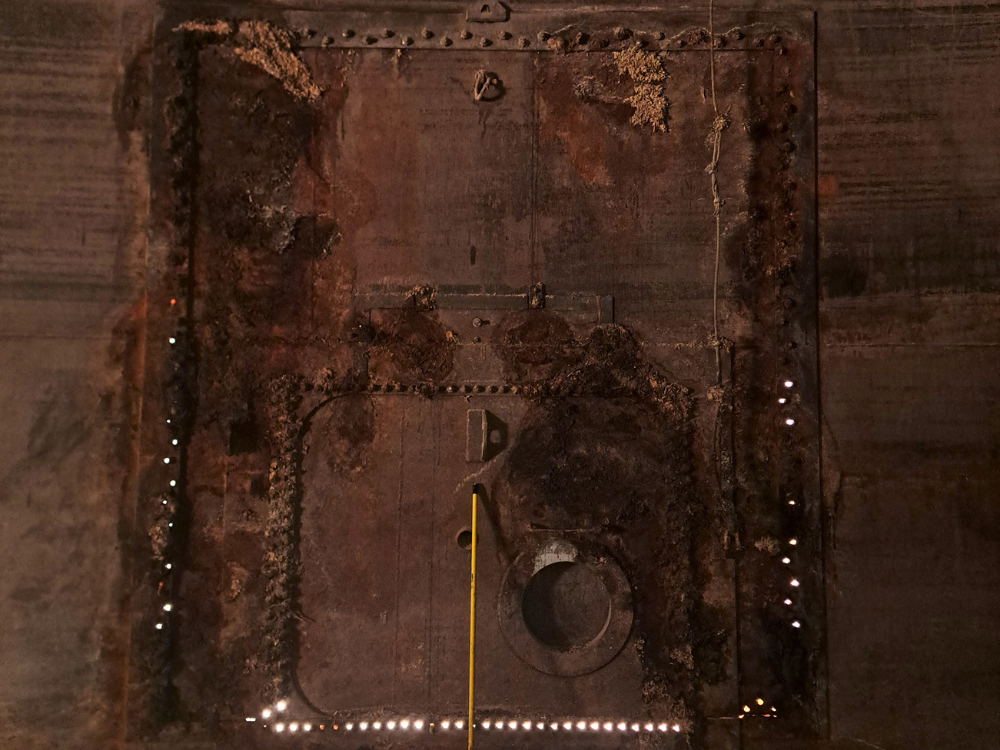
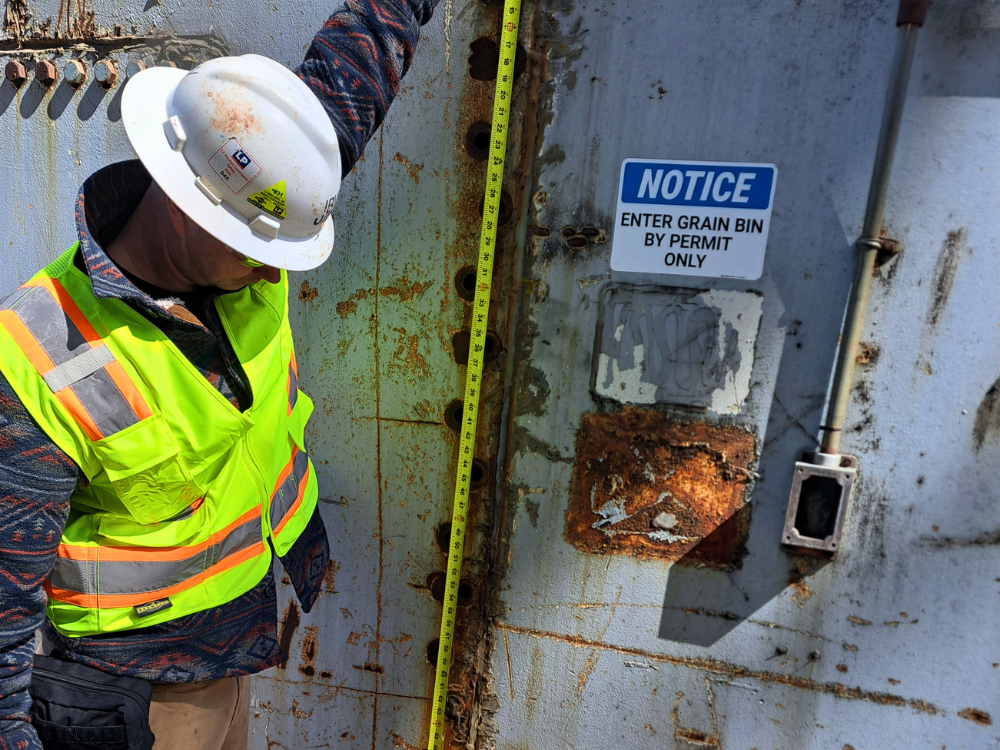
This request required a site visit to the facility to review the existing tank information, including a magnetic particle exam (MPI) of the crack. Following the site visit, it was observed that two door sheets added to the tank did not follow API 650/API 653 best practices. A secondary door sheet was added to the original scope for it to be proactively fixed, since the construction method was similar to the original door sheet needing repairs. JBW was able to provide structural repair designs for both doors, with issued structural drawings. However, due to time constraints with the ongoing shutdown, it was requested that JBW perform additional structural analysis to determine a recommended filling capacity for the existing bin without the engineered repair complete for the secondary door sheet, based on the capacity of the door sheet in its current condition.
The analysis, based on the information available, indicated that the bin is currently operating close to its calculated capacity. Current safety factors for bolts and welds on the vertical seams at the secondary door sheet were only marginally above 1, which is significantly lower than typical industry standard safety factors. It was determined that while the bin has been serviced for many decades, the connections will likely continue to lose capacity as bolts and plates corrode. Based on the current conditions, analysis, and appropriate safety factors it was suggested to limit the bin operation to 2/3 capacity.
However, to help avoid downtime, JBW identified two temporary repair options that would allow the bin to operate at full capacity for a limited time until the permanent repair is implemented. The temporary repairs would reinforce and/or bypass the existing welds and bolts at vertical door sheet seams, which are currently the limiting factor for capacity. JBW proposed two options that would allow the bin to operate at full capacity.
Regardless of the option chosen, these repairs would be considered a short-term measure and should be replaced at the earliest practical opportunity and should not exceed one year of service without further inspection and reevaluation. This limitation is due to the repair being susceptible to corrosion and the existing material potentially being strained already. JBW recommended that a monitoring program be implemented for potential cracking in the wall plate at upper corners of the secondary door sheet, similar to where the crack formed at the primary door sheet; in order to ensure early detection of any new crack formation during the duration in which the bin is used with the temporary repair installed.



Sectors
- Grain & Agriculture
Services
- Structural Engineering
Contact Our Team
Connect with our team for your next project. We are committed to removing barriers and delivering innovative, efficient, and reliable engineering solutions.