
If your facility uses electrical equipment, arc flash hazards are a risk, regardless of industry.
While arc flashes are commonly associated with high-voltage environments, they can also occur in lower-voltage systems when enough energy is present to sustain an electrical arc. Manufacturing plants, food processing facilities, warehouses, data centers, and commercial buildings all face potential exposure.
An arc flash is a sudden release of electrical energy caused by a fault in an electrical system. This fault creates an ionized path through the air, allowing electricity to travel outside its intended circuit. The result is an explosive event that can generate:
- Temperatures up to 35,000°F
- Intense light and radiant heat
- Pressure waves and flying debris
- Severe equipment damage
- Serious injury or fatality
Without proper electrical safety protocols, arc flash incidents can create significant risk for both personnel and facility operations.
In this article, we’ll cover:
- What causes arc flash hazards
- Common arc flash risks in industrial facilities
- Key NFPA standards for compliance
- Preventative maintenance and safety measures
- Why arc flash studies are critical for OSHA and insurance compliance
What Causes an Arc Flash?
Arc flashes occur when electrical current leaves its intended path and travels through the air between conductors or to ground.
This often happens when energized equipment is exposed or when personnel interact with live electrical components. However, many arc flash incidents are caused by everyday conditions that may go unnoticed.
Common causes of arc flash incidents include:
- Dust, dirt, or debris buildup inside electrical equipment
- Cleaning near energized switchgear or bus bars
- Loose electrical connections
- Corrosion or moisture intrusion
- Damaged insulation
- Equipment wear and aging
- Improper tool use
- Inadequate electrical safety training
- Accidental contact with energized components
Not all arc flash hazards are caused by operator error. In many cases, poor maintenance or aging equipment creates conditions for failure.
Examples of maintenance-related risks include:
- Damaged switchgear or panels
- Exposed live parts
- Cracked insulation
- Gaps in enclosure protection
- Mechanical wear and loose terminations
The risk isn’t just the electrical fault itself, it’s the outcome.
Arc flash incidents can result in:
- Severe burns
- Eye damage or blindness
- Hearing loss
- Blast injuries
- Secondary fires
- Equipment destruction
- Fatalities
Arc Flash Compliance: NFPA Standards You Need to Know
Electrical safety compliance plays a major role in reducing arc flash risk.
The National Fire Protection Association (NFPA) has established several standards that directly impact arc flash safety and facility compliance.
NFPA 70: National Electrical Code (NEC)
NFPA 70 establishes minimum requirements for the safe design and installation of electrical systems.
Its primary focus is:
- Electrical safety
- System reliability
- Proper installation practices
This code helps reduce the likelihood of electrical faults that can lead to arc flash events.
NFPA 70E: Standard for Electrical Safety in the Workplace
NFPA 70E is one of the most important standards for arc flash safety.
It focuses specifically on protecting workers from electrical hazards such as:
- Electric shock
- Burns
- Arc flash
- Arc blast
NFPA 70E includes requirements for:
- Arc flash risk assessments
- Incident energy calculations
- Arc flash boundaries
- PPE selection
- Safe work practices
- Lockout/tagout procedures
NFPA 70B: Electrical Equipment Maintenance
NFPA 70B provides guidelines for maintaining electrical equipment to improve safety and reliability.
A major update occurred in 2023 when NFPA 70B changed from a recommended practice to an enforceable standard.
This means facilities are now expected to develop and implement formal Electrical Maintenance Programs (EMPs).
Because of this shift, maintenance is no longer just best practice, it is becoming an increasingly important compliance expectation for facilities and insurers.
How to Prevent Arc Flash Incidents
Compliance alone is not enough. Facilities should also implement proactive safety and maintenance strategies.
Perform Incident Energy Analysis
NFPA 70E requires facilities to evaluate incident energy, the amount of thermal energy a worker could be exposed to during an arc flash event.
Using the IEEE 1584-2018 methodology, engineers calculate:
- Incident energy levels
- Arc flash boundaries
- Required PPE
- Safe working distances
These calculations help facilities identify high-risk equipment and determine where mitigation is needed.
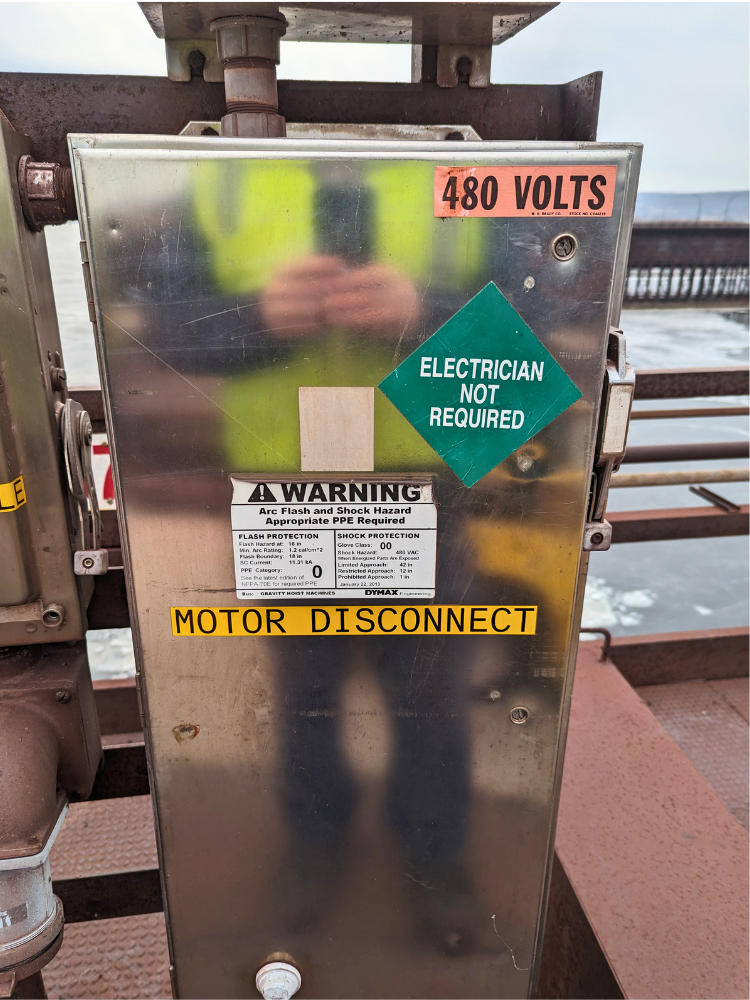
Install Arc Flash Labels
Arc flash labels provide workers with critical information, including:
- Incident energy level
- Required PPE category
- Arc flash boundary
- Equipment details
Proper labeling improves awareness and helps personnel make safer decisions before interacting with equipment.
Implement Training and Safe Work Practices
Personnel should receive training on:
- Electrical hazard awareness
- Proper PPE usage
- Lockout/tagout procedures
- Safe tool selection
- Equipment de-energization processes
Training is often one of the most effective ways to reduce human error-related incidents.
Prioritize Preventative Maintenance
Routine electrical maintenance helps identify issues before they become hazards.
Maintenance programs should include:
- Infrared inspections
- Torque checks
- Equipment cleaning
- Connection inspections
- Insulation testing
- Breaker maintenance
Preventative maintenance supports compliance with NFPA 70B while improving system reliability.
Why Your Facility Needs an Arc Flash Study
One of the most proactive steps a facility can take is completing an arc flash study.
An arc flash study is a detailed engineering analysis of your electrical distribution system. It evaluates system data to calculate:
- Incident energy levels
- Arc flash boundaries
- Fault current values
- PPE requirements
It also produces arc flash warning labels for applicable equipment.
NFPA recommends updating arc flash studies every 5 years, or sooner if:
- Major electrical changes occur
- Equipment is added or modified
- Utility data changes
- New regulations are introduced
Beyond NFPA and OSHA compliance, many insurance providers now require facilities to maintain up-to-date arc flash studies and electrical maintenance documentation.
JBW Arc Flash Study Services
At JBW, we take a comprehensive approach to arc flash hazard analysis and electrical safety compliance.
Our arc flash study services include:
- Detailed facility data collection
- Electrical system modeling
- Incident energy calculations
- Arc flash labeling
- Compliance documentation
- Actionable mitigation recommendations
Our goal is to help facilities:
- Improve worker safety
- Reduce operational risk
- Maintain NFPA and OSHA compliance
- Protect critical electrical assets
To learn more about our process, visit our related article: JBW Arc Flash Study Assessments.
Protect Your Facility from Arc Flash Hazards
Understanding arc flash hazards is essential for maintaining a safe and compliant facility.
Standards like NFPA 70, 70E, and 70B are not designed to slow operations, they exist to protect people, equipment, and business continuity.
Because every facility has unique electrical systems, risks, and operational needs, the best next step is a facility-specific assessment.
If you’re ready to improve electrical safety and compliance, contact JBW today to discuss your facility and learn what an arc flash study could look like for your operation.



Contact Our Team
Connect with our team for your next project. We are committed to removing barriers and delivering innovative, efficient, and reliable engineering solutions.